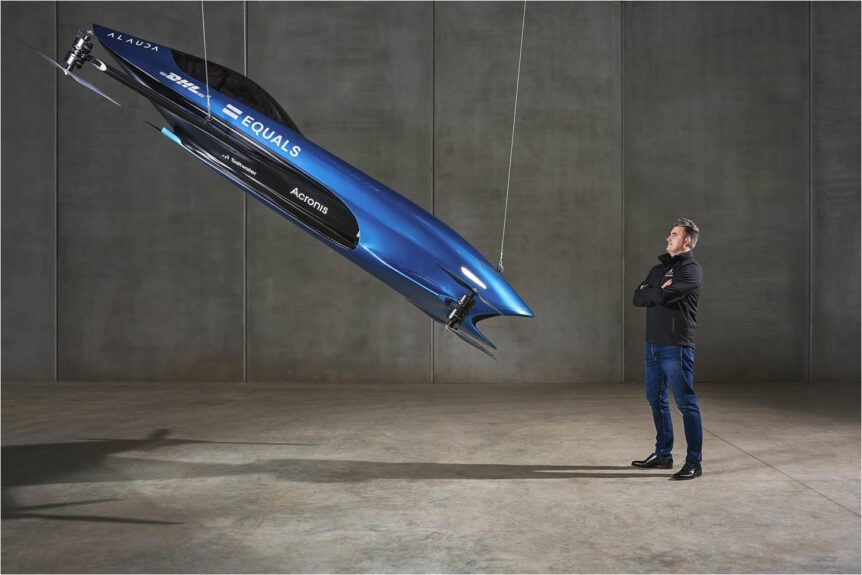
Electric Air Racing is a modern take on an age-old idea. Ever since people tamed horses, the idea of comparing their speeds became important. Boats, cars, and aircraft followed the same path. As with horses, the idea that “racing improves the breed” held sway. Now, one Australian company and a major aeronautical organization hope to make air racing a path to the future. Alauda Aeronautics Matt Pearson founded the Airspeeder racing program with the credo, “Competition accelerates progress.” Toward that end, he partnered with Alauda, an Australian firm, to develop a group of high-performance aerial racers. Looking somewhat like the vehicles flown by Luke Skywalker in the Star Wars films, the “flying cars” certainly evoke a performance image. The team recently flew three Airspeeders via remote control with First Person View (FPV) technology helping ground-based pilots control their craft around a Alauda unabashedly uses the term “flying cars,” as in, “Racing to deliver a revolution in personal air mobility so …