Two Electric Approaches to Coastal Waterways

Dean Sigler Announcements, Batteries, Electric Powerplants, Sky Taxis, Sustainable Aviation Leave a Comment

Two electric approaches to providing seaside flight come from cold and warm climates and from elevations close to sea level to topping Norwegian fjords.  Both rely on electric power to carry up to 12 passengers between seaside destinations. Regent Seaglider If the Wall Street Journal can overcome its skepticism and marvel at the $7 billion in letters of intent or other forms of interest, they might look into what seems to be drawing potential customers.  That may come from the company’s mission, “To drastically reduce the cost and headache of regional transportation between coastal cities.” Skimming the water at up to 180 mph, the Regent Viceroy employs Wing In Ground effect (WIG) aerodynamics to lift it high enough to skim the waves while benefiting from flight in ground effect.  That cushion of air that helps sustain an aircraft on initial takeoff stays with the Viceroy during its entire flight, reducing the power needed and extending the range. With today’s batteries, …

N Is For Noise, D is for Deliveries*

Dean Sigler Electric Powerplants, Hybrid Aircraft, Sustainable Aviation Leave a Comment

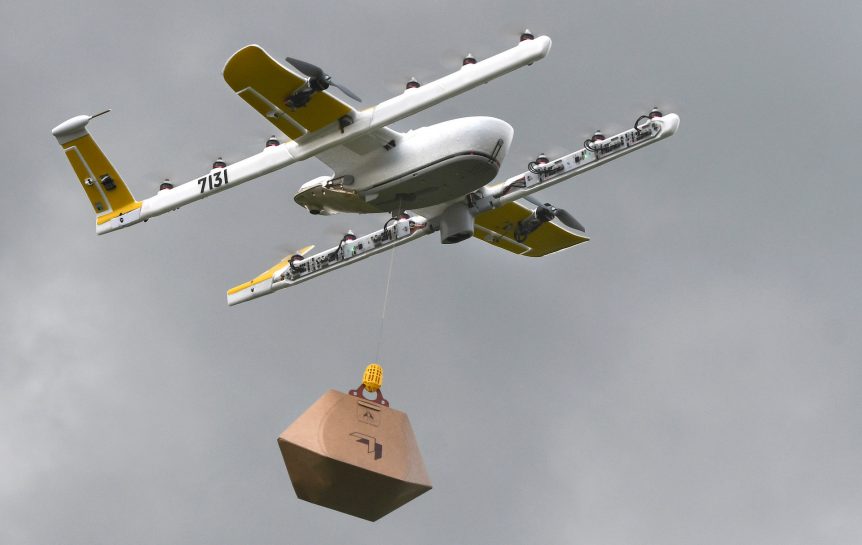
A July, 2017 article in New Scientist reported that a small test group found “the noise of drones more annoying than that of ground vehicles.”  This has implications for enterprises such as Amazon and Google that hope to perform home deliveries of various goods, including food.  Almost as a refrain, the Wall Street Journal reported in December, 2018 that, “Wing – the  drone delivery company that spun out from Google — was annoying residents in the Australian town where it tests its services.”  Folks in Bonython, the down-under township where the company had set up shop, “Likened the sounds of the original delivery drones to a “chain saw gone ballistic.”  This caused some to spend less time outdoors, and dogs evidenced signs of “a considerable amount of anxiety.” The Business Insider added that a Wing spokesperson “confirmed… that it has begun testing a quieter drone that ‘blends in’ with nearby sounds.”  The unidentified spokesperson explained, “We’ve developed and are testing a new …
From DARPA Ugly to Svelte and Streamlined

Dean Sigler Electric Aircraft Components, Sustainable Aviation Leave a Comment

Seeing Google cars navigating our streets and highways, with their arrays of spinning sensors and antennas bristling from their roofs gives us the impression that the technology involved is complex and expensive.  Until recently, they were, with Wired reporting that early Google cars had multiple $80,000 LIDAR systems, and entrants in DARPA (Defense Advanced Research Projects Agency) challenges often sported over a quarter-million in esoteric devices that could, on occasion, spot the Holy Spirit in the vicinity.  (Your editor made that last part up.) Mike Ramsey, writing for the Wall Street Journal suggests those prices may be going down – way down.  “A Silicon Valley startup says it has solved several of the issues that might plague the introduction of autonomous vehicles — primarily the cost of the equipment. “Quanergy Systems Inc., of Sunnyvale, Calif., says it will offer a light detection and ranging sensor — or LIDAR — next year that costs only $250 and is the size of …